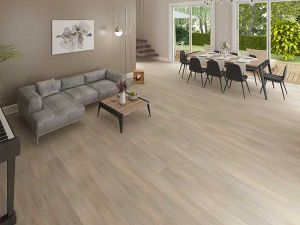
 Porcelain floor tiles are made with denser porcelain clay and have less pores on the upper surface. Scratches and discoloration are less on porcelain tiles with polished and matte surfaces. Porcelain tiles can be used in places where circulation is intense due to their abrasion, scratch and impact resistant structures. Their low water absorption rate makes them compatible and resistant to all climatic conditions.
The Porcelain Enamel Institute (PEI) classifies porcelains into five groups according to their surface abrasion grade. Usage areas of porcelain tiles are determined according to this classification. The determining factor in this classification is the usage frequency of the spaces and the amount of users. In addition, as it defines the function in the action performed in the place where it is used, it shows its effect in choosing the appropriate porcelain tile. At this point, these ratings help the designer as a guide in the use of porcelain tiles. The classes formed according to these abrasion degrees are graded as follows:
Related: You can read linoleum floor covering article too.
Group I Light traffic: In residential bathrooms,
Group II Medium traffic: In residential kitchens, foyers and laundry rooms but where there is no heavy traffic.
Group III Medium-Heavy traffic: It can be applied in all residences with normal pedestrian traffic.
Group IV Heavy traffic: In not very busy commercial areas, eg offices and showrooms.
Group V Very heavy traffic: It can be used in commercial areas with heavy usage, in areas such as shopping malls, airports, hotel lobbies.
The clay used in the production of porcelain tiles is of higher quality than ceramic tiles and they are fired at high temperatures. This makes porcelain tiles durable and resistant to the load on them. The glaze used on the surface spreads throughout the body of the tile at high temperature. With the spreading of the glaze to the whole body, the maintenance and cleaning of the tile becomes easier. Color options of porcelain tiles are more limited than ceramic tiles.
 Flooring Systems